About
From neurons to interfaces.
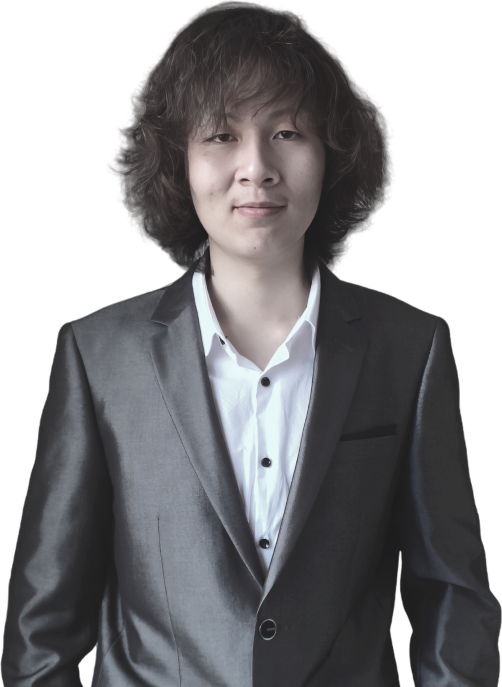
I’m LI Kanyu. Psychology trained me to study minds; twelve years of engineering taught me to build; UX research is where they meet.
- Psychology
- UX Research
- Technology
- Education
The path
How I got here.
Four chapters of inquiry, supported throughout by 12 continuous years of software engineering.
Psychology, BSc
Jilin Normal University. The question of these years: how do you measure what happens inside a person? My thesis studied how emoji change emotional reading; when no suitable experiment software existed, I wrote the program myself.
Cognitive Neuroscience, MSc
Beijing Normal University. The question widened from one mind to two: how do brains synchronize during real interaction? It became hyperscanning research, two peer-reviewed papers, and the custom acquisition software behind them.
Production Systems & Tech Lead
Beijing Dehydration Culture & Nice Stick. The question moved into products: why do well-built systems keep failing the people who use them? Promoted to technology leader within two years, I directed interactive video engines, WebGL frame-slicing schedulers, and internal publishing platforms for millions.
UX Design, Master's
Wilfrid Laurier University, since 2025. The question now is the relationship between people and AI: what makes people trust AI, and how can AI systems understand what people need? Pursued through studies of statistical software and LLM conversation tools, and formalized as my own framework, Agent Experience.
The bedrock
12 years of hands-on code
Software engineering is not a detour between degrees—it is the continuous medium running beneath all four chapters since 2014. From building custom fNIRS acquisition systems in the lab to directing WebGL engines in production and shipping open-source software with 1,000+ stars, I build the tools I research with.
The through-line
Writing & teaching
Underneath every period runs one habit: whatever I learn becomes material other people can use. Essays (1.04M+ reads on sspai), statistics lectures, a brain-science textbook for young learners, an R workshop, and a quantitative UX workshop at Laurier.
Why it matters
A researcher who can also build.
Research design
Experiment training means hypotheses, controls, coding schemes, and honest limitations, rather than vibes.
Instrumentation
I can build the prototype, the logging, and the analysis pipeline, so studies don't wait on engineering.
Communication
A million-plus reads of practice at making findings land with the people who decide.
Credentials
Publications, teaching, and open source.
Publications
Peer-reviewed hyperscanning research (social neuroscience), a conference poster, and an independently published book.
- Affiliative bonding between teachers and students through interpersonal synchronization in brain activitySCAN · 2020
- Shared neural representations of syntax during online dyadic communicationNeuroImage · 2019
- Neural mechanism of the pair-bonding process in romantic lovePoster · 2019
- The Contemporary Student Survival HandbookBook · 2023
Teaching & curriculum
R workshop materials open-sourced on GitHub; 9-week Quantitative UX Workshop for designers.
- R WorkshopOpen materials
- Quantitative UX Workshop for designers9-week course
Open source & community
Rune (1K+ stars, Steam + Microsoft Store, press coverage); psychology experiment software in continued use; Recative System design tooling.
- Rune, open-source music player1K+ stars
- Psychology experiment software platformIn continued use
- Recative System, interactive video engineOpen source
Full details on the CV
Open CV“First, find a good question. One that is clear, falsifiable, and genuinely needed.”
LI Kanyu, on research questions
Let's talk research.
Now you know how I work. I’d love to learn what you’re working on.