Oasis / Voice-Driven Emotion Network Paradigm
Questionnaires about mood give one number and lose the story behind it. Diaries keep the story but take weeks to read by hand. I designed a study where people talk about their day for a few minutes, and built the software that turns those recordings into a map of which feelings come with which events. I wrote the 35-page study plan and built the working pipeline. The platform is in closed beta.
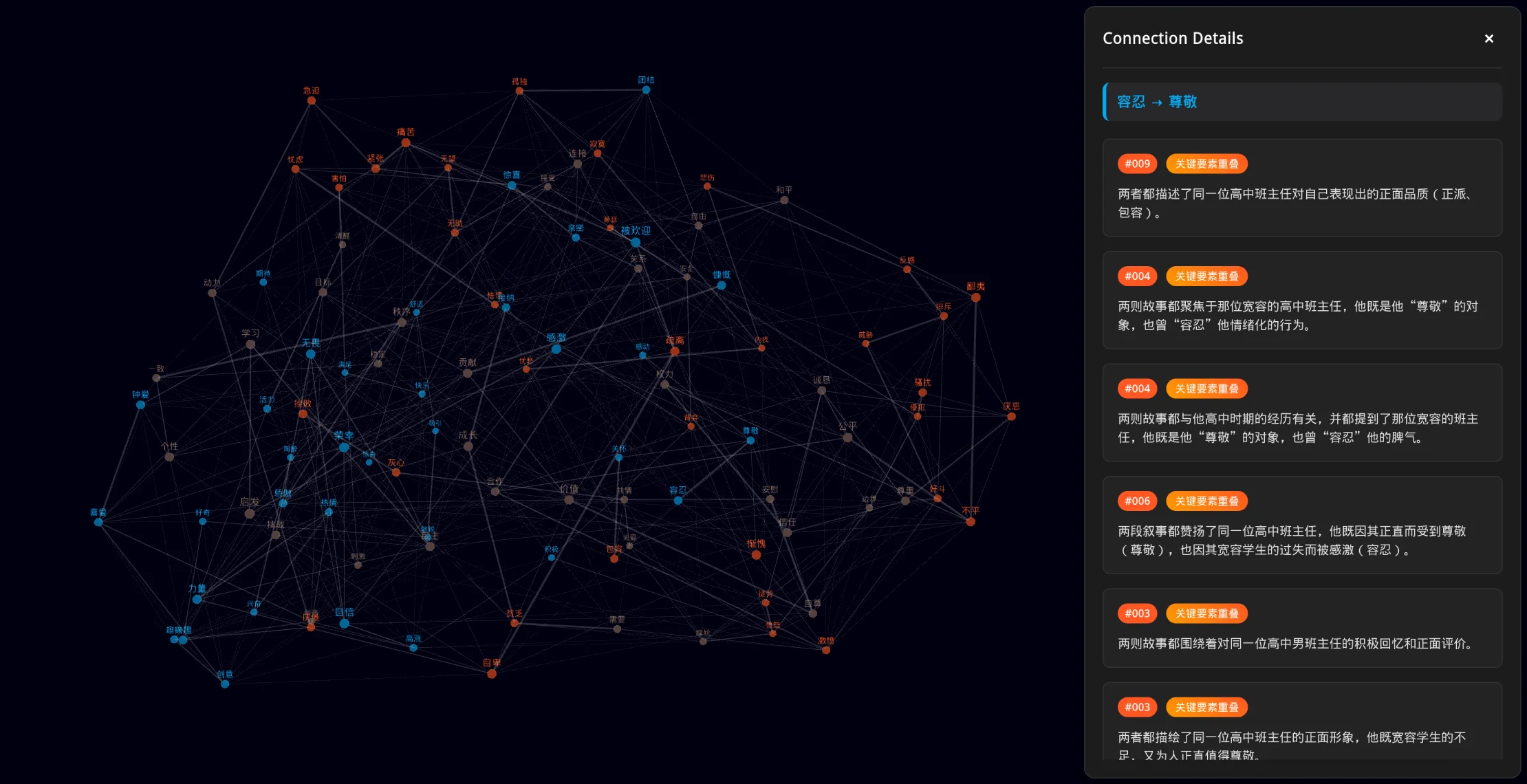
TL;DR
- The problem: standard mood questionnaires ask people to sum up past weeks in a score and lose what happened. Free-form diaries keep the context, but someone has to read and code every entry by hand.
- What I designed: a daily session where people speak about their day for three minutes, plus three rule books that say how to label emotion words, the events behind them, and how they connect. It builds on a well-known theory that the brain builds each emotion from the situation around it.
- What I built: the full software, which runs on the research team’s own server. It transcribes the recordings, has AI models analyse each one from three angles, drafts follow-up questions that a researcher approves, and flags any sign of risk for a person to review.
Role
Designed the study, designed and built the software
Built on
Barrett’s theory that emotions are built from context; a standard published list of emotion words (CAWS)
Tech Stack
Rust, Axum, SQLite, whisper-rs, React Router
Delivered
35-page study plan, 3 labelling rule books, working software
A mood score says how someone feels and leaves out why.
Psychologists mostly measure mood with short questionnaires. They work well for comparing large groups, but they turn a person’s week into one number. What matters for helping someone is the chain from what happened, to how they felt, to what they needed, and a score loses it.
A mood questionnaire
Over the last 2 weeks, how often have you had little interest or pleasure in doing things?
- Not at all
- Several days
- More than half the days
- Nearly every day
It takes 2 to 5 minutes, and the score can be compared with large groups of people.
People rate weeks from memory, which is often wrong, and mixed feelings become one number with no reason attached.
A diary
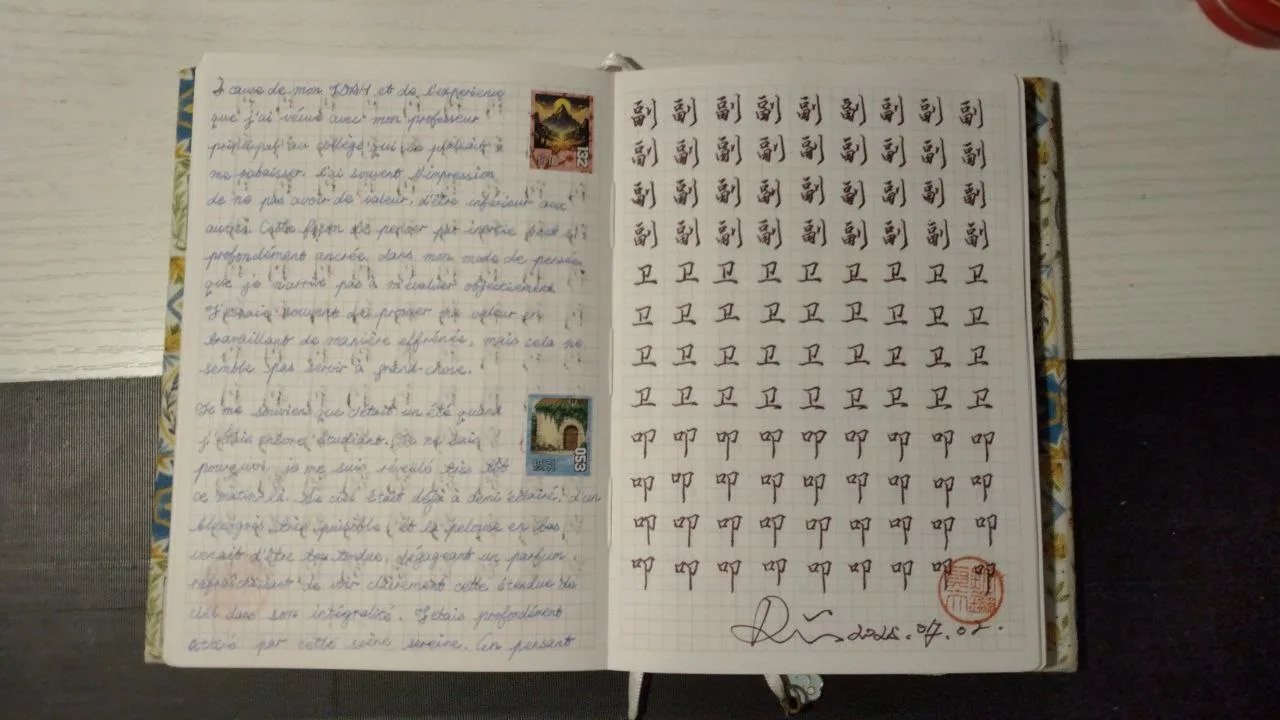
It keeps what happened and the person’s own words about how they felt and coped.
It cannot be counted. Trained people have to read and label every entry, which takes weeks.
Measuring how feelings connect with a questionnaire would take 129,960 questions.
I first wanted to map how my own feelings relate to each other, so I planned to rate every pair of emotion words on a five-point scale. The emotion handbook I had written lists 361 words.
361emotion words
360other words to compare each with
129,960questions
I tried it on myself first, with 105 short stories.
Emotion words are learned through things that happen to us, so each word should bring back a memory that fits it. I kept the first three rings of the emotion wheel, 130 words, and wrote stories of three or four sentences, one word each, in sets of three: a pleasant feeling, an unpleasant one and a need. From June 30 to July 10 I filled sixty handwritten pages.
Comparing 105 stories still means 10,920 pairs. I asked a language model for the 200 most related pairs and why they were related, using five kinds of link, and ran it ten times. A link that came up in many runs counts as more certain. The strong links came with reasons that agreed with each other.
- They share a theme or a part of life
- One follows from the other in time or as a cause
- They show the same inner conflict or defence
- They involve the same important person
- They share a person, place or thing
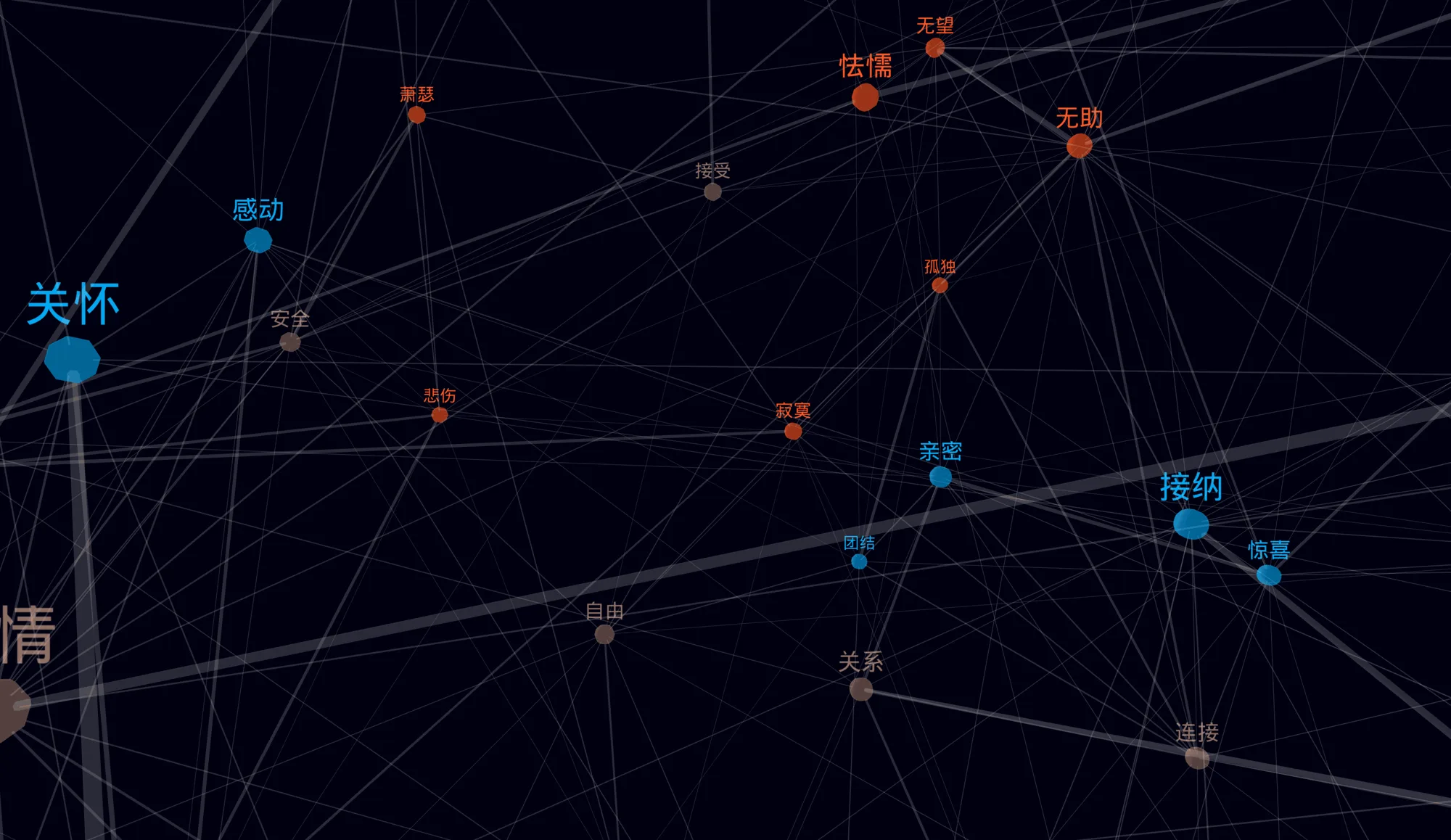
Oasis turns that experiment into three codebooks a study can repeat.
Oasis follows Lisa Feldman Barrett’s theory (2017) that the brain builds each emotion from body signals, the situation and words we have learned, so the same event can feel different to different people. To make that countable across many people, I wrote three codebooks, rule books that tell the coder which label applies.
Emotion words
Emotion words from a standard published word list (CAWS). Only words people rate as familiar, 6 or more out of 9, are kept, 500 to 800 in all, each with published ratings of how pleasant and how intense it is.
Events
What happened, sorted in levels: the person’s own pressures such as work, study and health, then family, then wider social life.
Links between entries
How one entry leads to another: what caused it, a feeling growing stronger, how the person coped, and the need underneath, such as safety, autonomy or belonging.
Four short steps a day, designed so people do not tire of it.
Participants take part every day for 10 or 20 days, so each session has to be quick and the same every time. Speaking is easier than writing, so the main step is talking about the day for at least three minutes.
18 to 27 minutes a day, for 10 or 20 days
Rate yesterday’s analysis
8 to 10 min
Two analyses of yesterday’s diary appear side by side, with no sign of which model wrote which. The participant rates how accurate each one is from 1 to 5, then fills in one standard questionnaire, such as PHQ-9 for depression or GAD-7 for anxiety, a different one on different days.
Breathe
5 min
A recorded breathing exercise clears the head after the ratings and brings attention back to the day’s most important event.
Talk about the day
3 to 10 min
At least three minutes of speaking, which takes far less effort than typing. Whisper turns the audio into text on our own machine, a language model removes the ums and repeats, and the participant confirms the text.
Rate the day
2 min
Two five-point scales: how pleasant the day felt and how strong the feelings were. This rating comes before any analysis, so it can later be compared with what the model found.
Three levels of risk, each with a person responsible and a deadline.
People may say things in a diary that show they are at risk. The study plan sets out what happens then: what counts as each level, who responds, and how fast. The more serious the sign, the shorter the deadline.
Level 1
Respond within 24 hours
Words of avoidance, such as constant exhaustion or feeling alone.
The entry is flagged. A researcher reads it within a day and keeps watching how it develops.
Level 2
Respond within 48 hours
Thoughts of self-harm, with no plan and no time set.
A researcher is alerted at once and contacts the person within two days for an assessment with the Columbia Suicide Severity Rating Scale (C-SSRS).
Level 3
Respond within 1 hour
A plan, the means, or intent to act now, in speech or text.
Emergency response within an hour. The contacts the participant agreed to in advance are called, and the person is handed over to a crisis centre.
Identifying details are removed before anything is stored.
A separate prompt goes through every entry before it reaches the database. Children take part under their own assent process, and concerns about safety at home are reported as the law requires.
- Names
- School names
- Places
- Exact dates
Does it give the same answer twice, and does it match what people report?
Oasis is a measuring tool, so the study plan judges it like one, with a target set in advance for each check.
The same entry gives the same codes.
Each entry is coded thirty times with the same prompt. The words chosen and their ranking should stay the same from run to run.
Target Fleiss’ kappa above 0.80, and Kendall’s W for the order of the top words
The words match how people rated their day.
The published pleasantness and intensity of the emotion words found are compared with the participant’s own rating right after speaking, and with their PHQ-9 score.
Target Pearson r above 0.40
The map of feelings has a shape that repeats.
Network measures show which feelings sit at the centre, which ones connect clusters, and whether the clusters form the same kind of structure across people.
Target Degree, betweenness, modularity and the small-world index
The study compares children with university students.
Children in grades 1 to 6 and university students take part. The comparison tests whether a denser network of feelings goes with more difficulty managing emotions, measured with the DERS scale, and whether people use finer emotion words as they grow up.